Search
Follow Me
Hate Tennis, Like My Blog!

I'm Following
Meltdown of the Week


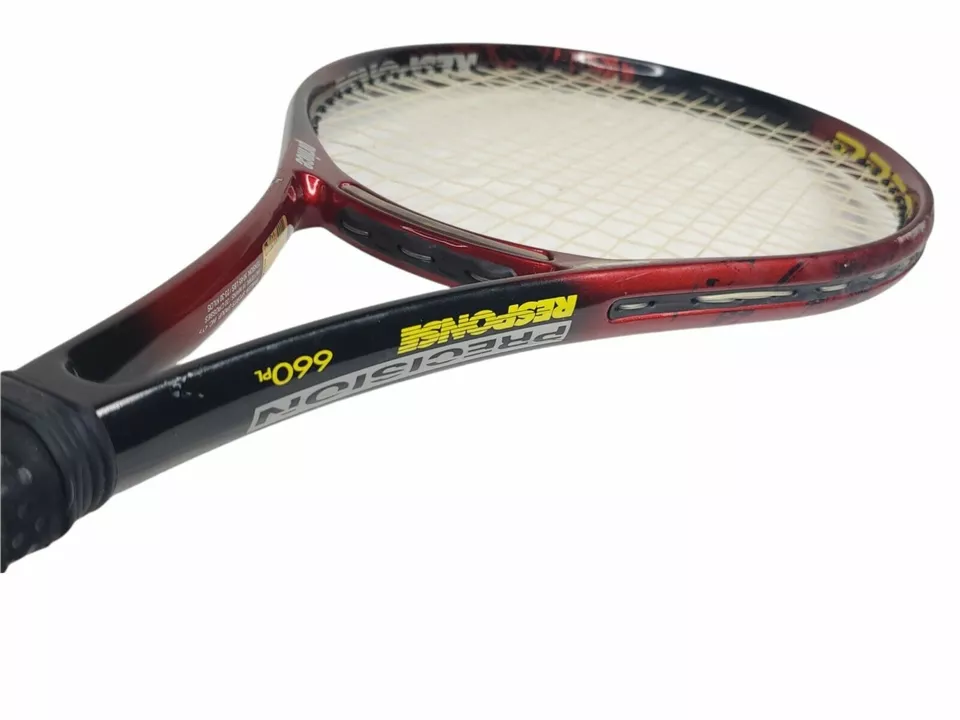
Finding Roger Federer Meltdown footage on YouTube is like finding a seat on the Number 4 Lexington Avenue subway at 9:30 in the morning. [Non-New Yorkers, take note: it's rare.] The Greatest of All Time usually deals with blown shots by dragging his middle finger across his forehead and tucking his hair behind his ear. Not this time. This was a semi-final match with Novak Djokovic at the 2009 Sony Ericsson Open in Miami, Florida. Djokovic just broke Fed in the third and deciding set and was up 15-0 when the Greatest of All Time took his eyes off a routine approach shot that could have evened the score. Federer went through lots of racquets when he was playing the junior circuit; wonder if he felt a little wave of nostalgia upon banging this one hard into the court.

On the Sideline
Saturday
Nov242012

Western Grip Seen in Western Art

Detail from Balthus' "The Street." Training for the men's or women's tour? Can't decide.

I think of the rise of extreme grips like the Western grip used by Rafael Nadal and Dinara Safina as recent developments in the modern game.

Here's proof that it was around as early as 1933, at least in France. That's when French painter Balthus created "The Street." This budding tennis player is one of several strange figures in the painting.

Check out that grip! And how she's pointing to the oncoming ball with her non-racquet hand! She's even got her weight on her back foot, ready to release into the shot as she follows through.

All she needs is some strings in her racquet and a ball with some bounce left in it and it's game on.

Here's the bigger picture, without glass glare.

 "The Street" by Balthus. Museum of Modern Art, New York City.

Monday
Nov192012

What We've Got Here is Failure to Communicate

Haters of a certain age will recognize this scene from the 1967 Disney animated classic, "The Jungle Book."They may also be saying to themselves, "Hey!  That's exactly the conversation I had with my doubles partner last weekend!"

"Whatcha wanna do, mate [to get past that buzzard who keeps poaching our shots]?"

"I dunno, mate.  WhatCHOO wanna do?"

In singles, I'm the only one who can sort out what is going right or wrong in a match.  On some days, this is like cutting my own hair, with the same disasterous results.

Doubles is supposed to be different.  Doubles is supposed to offer the tennis equivalent of someone to run the razor up the back of my neck.  I've got a Worthy Comrade to bounce strategic ideas off of, get encouragement from, laugh off missed shots with.

But this can only happen if my partner wants to talk.  

I played a match a few weeks ago with a Worthy Comrade who was as tight-lipped as a KGB agent.  Our Worthy Opponents included my husband Mark, who frequently employs a return lob on my serve over my partner's head and high to my backhand.  A money shot.  Ka-ching! 0-15. 

"Whatchoo wanna do against these guys?" I ventured.  "How do you want to protect against Mark's lob?"

"Let's just see what happens," was the response.  Oh, blimey!

What happened was a break of serve.  We were quickly down in the first set, 1-3.  I didn't know what to do, or, at this point, to say.  My Comrade was not the strategizing type, nor did they really want any rah-rah talk from me when we faced critical points.  

All the coaching I've ever received in doubles has emphasized the importance of communicating with your partner.  Pat Blaskower, in The Art of Doubles: Winning Tennis Strategies and Drills, writes this:

All good doubles teams communicate frequently between points (sometimes after every point if it is a very critical game).  They share ideas; give positive and specific suggestions for point-playing; encourage one another to stay confident; and even sometimes confess to anxiety or "choking."  

She also includes a great example of "vulture talk:"

Sgt. Pat Blaskower. You're already on her bad side, because she doesn't have a good one.Don't walk on the court and allow your opponents to witness a conversation such as this one:

"What side do you play?"

"Oh, I don't care.  Do you?"

"No, not really.  Shall I play forehand?"

"OK.  Shall we serve? We won the spin."

"Oh, I'm not real confident of my serve.  You want to serve?"

After a discussion like this one, be assured that your opponents are, at best, supremely confident and, at worst, sure that you two are a couple of lunatics who quite possibly have no idea what you're doing.

Blaskower doesn't mince words.  The introduction to her book -- the introduction, mind you, where the author sets the tone and invites the reader to join her on the deeper journey -- reads like a drill sergeant's withering critique of a new recruit.  Welcome to doubles, shit-for-brains. You double fault on my watch, you drop and gimme 50 pushups.  She must have been quite a coach.

She divides the doubles world into 3 types of players: those who make things happen, those who watch what happens and "those who wonder what the hell happened":

These are the players whom you have heard say, "I can't think and play at the same time.  I just hit the ball."  Freely translated, this means, "You can fill you head with fancy strategy all you want, but if I hit the ball hard enough at you, you'll probably miss, so why do I need all those expensive strategy lessons?"

As a member of the Watch and Wonder camp, and too afraid to continue reading Blaskower's book (get it for $1.40 used on Amazon!), I turned to former doubles Top Ten doubles tour player and teacher Anne Hobbs for advice.  

"You must meet your partner where they are," she told me.  "The best way to get him or her to communicate is to get on their level first.  Help them feel comfortable, with no demands."

This is especially true, she said, when my Worthy Comrade is serving.  I often start a doubles match by sidling up to my partner and asking her or him what they plan to do with their serve, so I can anticipate the return.  

"May I suggest that is not the right question," Hobbs said gently.  (Blaskower would have had me doing wind sprints.) "It puts too much pressure on the server.  Leave it them to tell you what they are going to do with the ball."  

Meet your partner where they are."

I'm surprised I didn't realize this on my own.  When faced with the same question, I've often responded, with just a touch of steeliness, "I plan on just getting my serve over the net and in the box." (Now leave me alone and get back over to your side of the court.)

So, don't put pressure on your partner when he or she is serving by asking them -- or telling them -- what they should do.  And don't try to get a talker to talk.  It will shut them down even more.  I got it.  

"But what if we've lost the first set?" I asked Hobbs.  We've got to talk then!  It's like a marriage going south.  Time to start the therapy sessions.  "How do I talk to my partner about what we're doing wrong or what we could do better?"

Again, Hobbs suggested I wasn't asking the right question.  My Worthy Comrade, she pointed out, was what she calls an "impulse player" rather than a "conscious player."  The impulse player prefers to react, rather than bring any awareness to what they are doing.  Trying to get them to do so by asking them to think about themselves or us as a team won't work.

"Focus on your opponents," suggested Hobbs.  "Turn it around.  Ask your partner, 'What do you think we can do to frustrate them?'  In psychologist's language, keep [the conversation] away from their ego!"

Pat Blaskower recommends suggesting a combination of shots that allows both players to share responsibility for the outcome of the next point.

Good doubles teams know this and experiment with solutions to problems. When things get rough, they never retreat into sulky silence leaving their partners alone, exposed to the enemy and fearful to utter even simple words of encouragement.

Don't be a lunatic, or a vulture with a bad blonde mullet.  Quit living in the 60's, for one thing.  And absolutely talk to your partner.  Hobbs' and Blaskower's suggestions make me all the more committed to do so, even with my KGB Agent of a partner.  But rather than hopping up and down on my branch of the baseline, trying to force a conversation, I will pratice communicating in a way that puts my partner at ease and keeps the channel open. Only then do we have a chance of figuring out what we wanna do and not ending the match as roadkill. 

Tuesday
Nov132012

I Am Still Learning

"I am still learning."  

Michelangelo said that.  I know, because I have a magnet on my fridge that says so.  

I believe in magnet sayings.  

I also have one that says "He has needs."  

Like I said, I believe in magnet sayings.

Where were we? Oh, right. Michelangelo.  The creator of David. The man who channeled God and painted the Sistine Chapel.  The carver who caressed the Pieta out of marble. A master of multiple creative disciplines.  He was still learning?  

Yes.  He kept a beginner's mind about his art.  It's a good reminder for me, a true beginner in tennis, to do the same.

Writer and Zen practitioner Natalie Goldberg says in Writing Down the Bones:Freeing the Writer Within that every time she sits down to write, she has to come back to beginner's mind, "the first way I thought and felt about writing.  In a sense," she continues, "that beginner's mind is what we must come back to every time we sit down and write. There is no security, no assurance that because we wrote something doo two months ago, we will do it again.  Actually, every time we begin, we wonder how we ever did it before.  Each time is a new journey with no maps."

Believe everything you read on refrigerator magnets. Then ignore them.The same is true for tennis.  This I know for sure.  Just because I was killing volleys last Sunday in my latest lesson with Coach Al didn't mean I did so yesterday in my doubles clinic at Roosevelt Island.  I kept feathering them back, too much underspin, no body weight behind them, as I frequently do when I'm tense and tight and unconfident.  

I am still learning.  

Here's another writer, screenwriter and creativity teacher Julia Cameron, of The Artist's Way: A Spiritual Path to Higher Creativity, in a similar vein:

At the heart of the anorexia of artistic avoidance is the denial of process.  We like to focus on having learned a skill or on having made an artwork.  This attention to final form ignores the fact that creativity lies not in the done but in the doing.

"I am writing a screenplay" is infinitely more interesting to the soul than "I have written a screenplay," which pleases the ego.  "I am in an acting class" is infinitely more interesting than "I took an acting class a few years ago."

I am still learning....my forehand, my follow-through, my serve, my backhand, where to stand in doubles, how to talk to my doubles partner, how to talk to myself.  Still learning....and getting better.

Monday
Nov122012

Murray: Hard Work Pays Off, Even Without Vomiting

Murray, smiling, or trying to. Photo courtesy of Reuters.Haters, I'll have to remove Andy Murray from favorite son status of I Hate Tennis. He's unrecognizable, physically and mentally, from the sulking, swearing player who let his mind get in the way of his considerable gifts.

Consider this comment he made after finishing his 2012 season with a semifinal loss to Roger Federer in the Barclays ATP World Tour Finals in front of his countrymen in London on Sunday: 

"I would have liked to have finished with a win, but that didn't happen.  But for me, it's been the best year of my career by a mile," he said.  

Murray says his success will motivate him to work hard next month, when he begins what sounds like a grueling off-season training regimen.  But first, a more grueling task: finding a Christmas gift for his coach, Ivan Lendl.    

More on that in a moment.  But first -- Murray, focusing on the positive?  Haters, let us pause to consider this miraculous makeover.  To quote another sulker, John McEnroe, "You cannot be serious."

The Sunny Scot beamed on.  Here's more from the ATP's report:

"Why I would look back on that [his accomplishments this year] negatively now would be silly because I've achieved things I've never achieved before. I have to look back on it positively. If I don't, then that would be worrying.”

News flash, Haters: worrying about your shots is not the way to improve them.  Murry told reporters he may have lost in the end to Federer, 7-6(5), 6-2, but he was pleased -- yes, he used that word, pleased -- with how he continued to try to make things happen on the court, to think about ways to win matches "rather than waiting for my opponent to lose them."

The 25-year-old has had a breakthrough year.  He reached the finals of Wimbledon, the first Brit to do so since 1938.  He lost to Federer and cried on Centre Court during the post-match interview, but didn't let those tears dampen his resolve during the rest of the season.  Two weeks later, he beat Federer on that same court to take Olympic gold, then won his first major by beating defending champ Novak Djokovic at the US Open.

Murray elaborated on his new I Love Tennis outlook in for BBC Sport.  

"Sometimes when you lose a tough match or a big final, you spend the next few days thinking, 'Is it worth it? Is all the training making a difference? Will I ever be good enough to win one of these big events?'" Just the next few DAYS spent ruminating like that, Andy?  Me, I've taken the I Hate Tennis pledge as a Monthly Sustainer.

"I've been through so many highs and lows already," Murray told BBC Sport's Piers Newbery, "and to experience the sort of highs that I did in the summer made me realize it absolutely was worth it."

I've never actually got as far as vomiting in training, but I've certainly felt like it.

Absolutely worth it to train so hard, Murray can't take a breath.

"Most people would normally stop when they're struggling to breathe," said Murray, proving he's not only a master of the tennis court, but of the understatement. "But if you push yourself through that, you might feel horrible at the time but you'll feel better once you get off the machine or the track. It's pushing it that extra bit that makes all the difference."

But even Iron Man Murray has a breaking point.

"I've never actually got as far as vomiting in training [...] but I've certainly felt like it. Many, many times I've ended a session flat on my back with the world spinning above me."

Glad he got that off his chest, if not his stomach.  It humbles me to think Murray is putting in that kind of work, and wondering about the usefulness of it all when he loses.  What's my excuse, with just one lesson a week?  I'm not struggling to breathe, Haters, I'm just struggling.   

Meanwhile, Murray reveals his current struggle is not with being aggressive on the court or living in the "what if's" of a semifinal loss in the season-ending London event.  It's finding a Christmas present for Coach Lendl, who rarely smiles while watching his charge, even when Murray won Olympic gold and the US Open trophy.

He says he's considering giving Lendl a sense of humor.  

Friday
Nov022012

I Hate Tennis Back Up After Hurricane, Prospect Park Bubble to Follow

Deflated no more. New life breathing into PPTC bubble today. Photo: Stephen NessenI've been without tennis for more than a week. A WEEK, Haters.  And my blog host, SquareSpace, has been bailing out water since Hurricane Sandy sent her 85 mile per hour serve up the T against Worthy Opponent Jersey Shore.  (Jersey, my girl, let's show her who owns the court with an awesome return game).  I haven't been able to vent my spleen online all this time.

Guess that's what Reddit is for.  

Relief is in sight.  Word is the Prospect Park Tennis Center's bubble, deflated last weekend in advance of Sandy's exhibition match, is going up today.  There will be tennis for my teammates on the Ballbusters USTA Women's 3.0 League on Saturday morning, November 3rd.  I will get my weekly lesson back on Sunday November 4th.  And there will NOT be blood.

Whew.

Page 1 ... 5 6 7 8 9 ... 24 Next 5 Entries »